What Is Mental Flexibility?
By Neurons Away ·
Mental flexibility is the ability to adapt to new situations, shift your mindset, and respond to challenges without being stuck in one way of thinking. In today’s fast-paced world, this skill is more important than ever, helping people of all ages—kids, teens, adults, and seniors—navigate life with more ease and creativity.
But why is it so important?
- Better Decision-Making: Mentally flexible people can consider multiple solutions when faced with problems, making them more adaptable in both personal and professional life.
- Emotional Resilience: When things don’t go as planned, those with flexible minds can bounce back faster. They see setbacks as opportunities to grow, which reduces stress and promotes well-being.
- Increased Creativity: Flexible thinking opens the door to creativity. It encourages new ideas and solutions, allowing you to think outside the box in work, school, or even personal challenges.
- Improved Learning: For children, mental flexibility is essential for learning. It helps them adapt to new information and solve problems creatively, which builds confidence and curiosity.
- Cognitive Health in Aging: For older adults, staying mentally flexible can help keep the mind active and engaged.
How Can You Build Mental Flexibility?
Building mental flexibility doesn’t have to be complicated, and with the right tools, it becomes even easier. Here are a few simple tips to get started:
- Challenge Your Assumptions: Try viewing situations from different perspectives. This helps you break free from rigid thinking and opens your mind to new possibilities.
- Try Something New: Engage in a new hobby, explore an unfamiliar place, or do something outside your comfort zone. Novel experiences keep your brain active and adaptable.
- Reframe Problems: Instead of seeing setbacks as failures, view them as opportunities to learn something new or approach challenges from a different angle.
- Practice Mindfulness: Mindfulness helps you slow down, reflect, and respond more thoughtfully rather than reacting automatically.
For more practical exercises and expert guidance, check out our Mental Flexibility Workbook, available here. It’s filled with exercises designed to help you build cognitive flexibility, adapt to life’s challenges, and thrive in any situation!
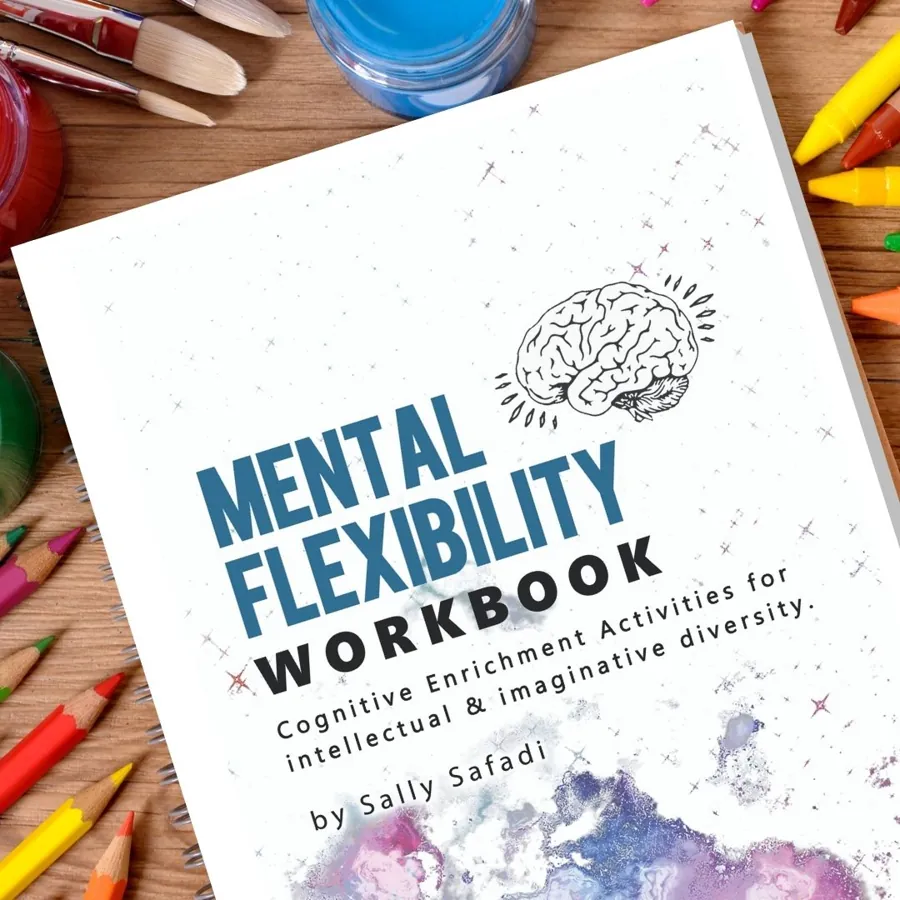
Mental Flexibility Workbook
Interactive worksheets that stretch thinking and spark conversation — with instructions for leading groups or one-on-one sessions.
See the bookGet a little more out of your mind.
Receive weekly creative challenges, thought-provoking questions, free activities, and new book releases.
No spam. Unsubscribe anytime. See our privacy policy.