The Benefits of Mental Flexibility for Kids
By Neurons Away ·
As children grow, they encounter a wide range of challenges, from academic pressures to navigating friendships and social situations. One key skill that can help them manage these obstacles is mental flexibility—the ability to adapt to new situations, shift perspectives, and approach problems in creative ways. Mental flexibility not only helps kids succeed in school but also builds resilience, fosters emotional well-being, and prepares them for life’s ups and downs.
Let’s dive deeper into why mental flexibility is so crucial for children and how you can nurture this skill at home and in school.
Why is Mental Flexibility Important for Kids?
- Builds ResilienceLife doesn’t always go as planned, and setbacks are inevitable. Mental flexibility helps kids see challenges as opportunities for growth rather than as failures. When they’re able to adapt and try different approaches, they become more resilient, learning to bounce back from disappointment or frustration more easily.
- Enhances Problem-Solving SkillsWhether it’s figuring out how to build a complex LEGO structure or how to approach a group project at school, mental flexibility allows kids to think creatively and find solutions. By trying out new ideas and strategies, they can tackle problems from different angles and discover what works best.
- Improves Social InteractionsMental flexibility isn’t just about academic problem-solving—it’s also vital in social settings. Children who can shift their perspective and see situations from another’s point of view are more likely to resolve conflicts peacefully and build stronger, healthier relationships with peers.
- Boosts Academic PerformanceIn school, mental flexibility is a key driver of learning. When kids are flexible thinkers, they are better able to adapt to new concepts, think critically, and make connections between different subjects. This openness to learning helps them excel academically and fosters a love for exploration and discovery.
How to Encourage Mental Flexibility at Home and in School
As parents and educators, you play a crucial role in helping children develop mental flexibility. Here are some simple strategies and exercises to nurture this skill:
- Ask Open-Ended Questions
Encourage your child to think outside the box by asking questions that don’t have a single right answer. Instead of asking, “What did you learn in school today?” try “What was something new you discovered today?” or “How could you solve this problem in a different way?” - Model Flexible Thinking
Children learn a lot by observing adults. When you encounter a problem, model flexible thinking by verbalizing your thought process. For example, if you’re stuck in traffic, say, “Let’s think of another route we could take,” or if plans change, show your child how you can adapt by saying, “We’ll try something new instead.” - Encourage Creative Play
Playtime is an excellent opportunity to foster flexible thinking. Engage your child in activities that encourage creativity and problem-solving, like building with blocks, drawing, or inventing new games. These activities challenge them to explore different ideas and approaches. - Reframe Mistakes as Learning Opportunities
When your child encounters setbacks, help them reframe mistakes as part of the learning process. Instead of focusing on failure, encourage them to ask, “What can I learn from this?” or “What could I try next time?” This helps them build resilience and approach challenges with a growth mindset.
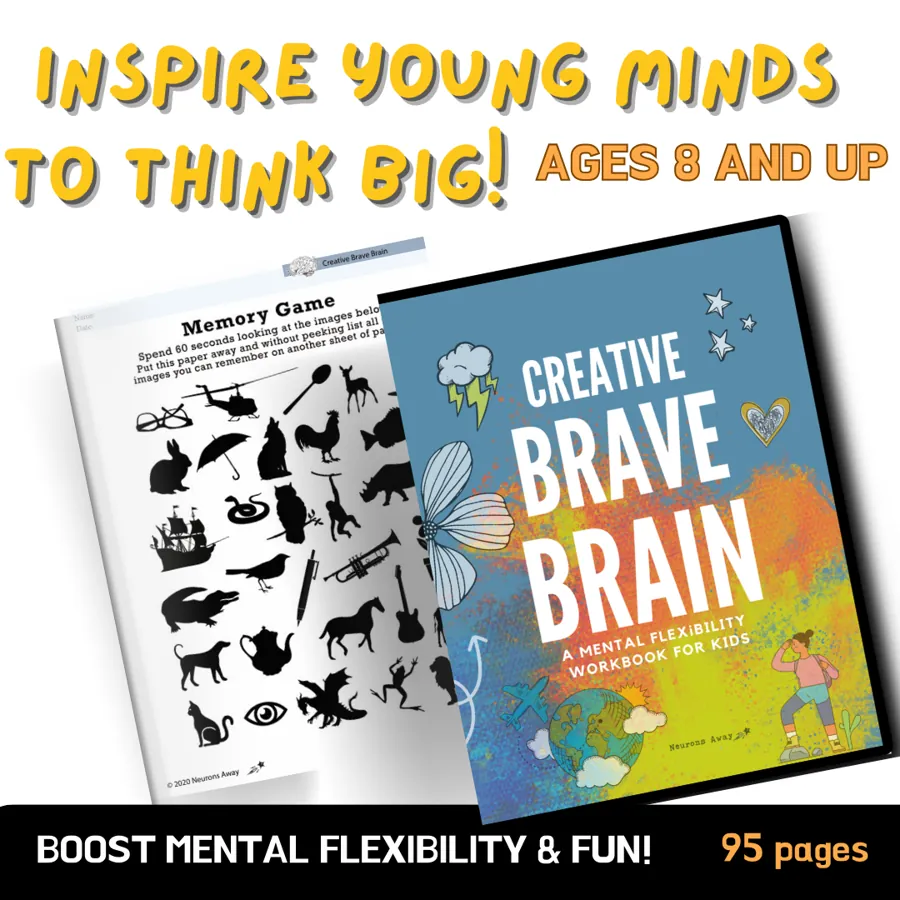
Creative Brave Brain
85+ quirky question-and-doodle pages that build imagination, healthy mindsets, and confidence — a screen-free alternative kids actually enjoy.
See the bookGet a little more out of your mind.
Receive weekly creative challenges, thought-provoking questions, free activities, and new book releases.
No spam. Unsubscribe anytime. See our privacy policy.