3 Ways to Improve Mental Flexibility in Adults
By Neurons Away ·
In today’s fast-paced world, mental flexibility is a critical skill that can help adults navigate life’s challenges, adapt to change, and approach problems with creativity. Mental flexibility allows you to shift perspectives, embrace new ideas, and keep your thinking open and adaptable, which is beneficial for everything from career growth to maintaining healthy relationships. Let’s explore three practical ways to strengthen mental flexibility and how these changes can positively impact your life.
1. Challenge Your Existing Beliefs
As adults, it’s easy to settle into certain beliefs and routines over time. While routines bring comfort, staying open to questioning your assumptions is crucial for mental growth. Here’s how you can start challenging your own beliefs:
- Practice Reflective Journaling: Take time to write about your thoughts, beliefs, and recent experiences. Ask yourself questions like, Why do I think this way? or Is there another perspective I could consider? Reflective journaling helps bring awareness to rigid thinking patterns and encourages exploration of new ideas.
- Seek Out Diverse Perspectives: Engaging with people from different backgrounds or reading viewpoints different from your own can broaden your understanding. Listening to different perspectives doesn’t mean you have to agree, but it can help you see things from a new angle and stay open-minded.
Challenging your beliefs not only fosters flexibility but can also improve decision-making and enhance empathy by helping you understand situations from multiple viewpoints.
2. Cultivate a Growth Mindset
A growth mindset is the belief that abilities and intelligence can be developed over time. Embracing this mindset is essential for mental flexibility, as it encourages continuous learning and adaptation. To cultivate a growth mindset:
- Set “Stretch Goals”: Set small, achievable goals that push you beyond your comfort zone. These might be related to work, fitness, or a hobby you’d like to master. Overcoming challenges, no matter how small, reinforces the idea that you’re capable of growth.
- View Setbacks as Learning Opportunities: Instead of seeing failures as dead ends, try to reframe them as stepping stones. Ask yourself, What can I learn from this? and How can I approach this differently next time? This shift in perspective builds resilience and encourages you to stay adaptable.
- Try New Activities: Regularly trying new activities, such as learning a language, taking up a new hobby, or experimenting with a different approach at work, keeps your mind active and flexible. Trying something unfamiliar helps your brain form new connections, making it easier to adapt to change.
3. Practice Mindfulness and Reflection
Mental flexibility also requires being present in the moment and self-aware, which mindfulness can foster. Being mindful allows you to pause, reflect, and make conscious choices instead of reacting automatically. Here’s how to incorporate mindfulness into your routine:
- Daily Mindfulness Practice: Take a few minutes each day to practice mindfulness. This could be as simple as focusing on your breath, observing your surroundings, or noticing how your body feels. Over time, mindfulness helps you become more aware of your thoughts and reactions, allowing you to respond more thoughtfully and creatively to challenges.
- Use Self-Reflection Exercises: Self-reflection can be a valuable tool for developing mental flexibility. After a challenging day or experience, take a few minutes to reflect on what happened, how you felt, and what you might do differently next time. Self-reflection encourages adaptive thinking, as it allows you to learn from experiences and approach future situations with greater awareness.
How Our Workbooks Can Help
If you’re interested in building your mental flexibility, our Mental Flexibility Workbook provides exercises that guide you through reflective journaling, growth mindset activities, and mindfulness practices. These exercises encourage you to challenge assumptions, set goals for personal growth, and practice self-awareness, helping you strengthen this essential skill at your own pace.
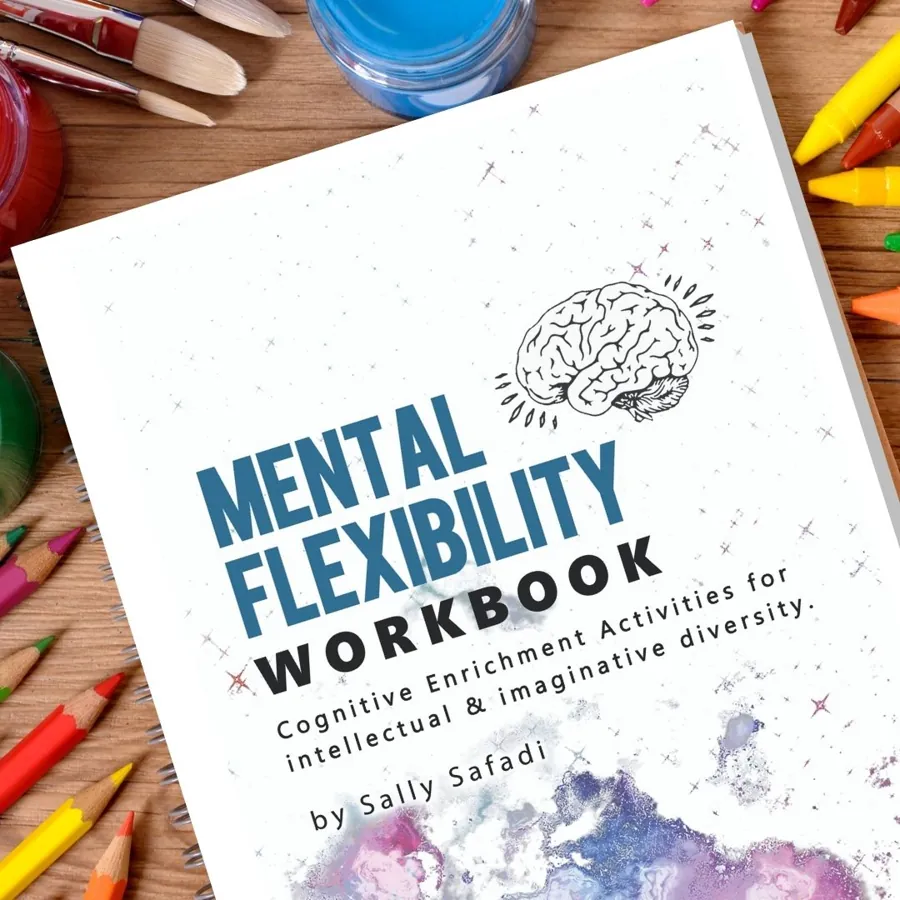
Mental Flexibility Workbook
Interactive worksheets that stretch thinking and spark conversation — with instructions for leading groups or one-on-one sessions.
See the bookGet a little more out of your mind.
Receive weekly creative challenges, thought-provoking questions, free activities, and new book releases.
No spam. Unsubscribe anytime. See our privacy policy.